Experience · Grief and memory
Three weeks after her husband’s funeral, a woman is washing up in the kitchen when she hears his voice behind her, as clear as ever, saying her name. She turns round. No one is there. She tells no one, afraid they will think she is losing her mind. Yet what happened to her is so common that researchers consider it a normal part of grief — and so profound that many people treasure it for the rest of their lives.
In short: Many bereaved people sense a deceased loved one: they feel a presence, hear a voice, see a figure, feel a touch or smell a familiar scent. A classic 1971 study of widowed people in Wales found that nearly half had such experiences; later research puts the figure between 30% and 60%. They are usually comforting and are not in themselves a sign of mental illness. Religions read them as real contact with the dead; psychology sees them as part of how the mind adjusts to loss. Neither view can be proven.
How people experience it
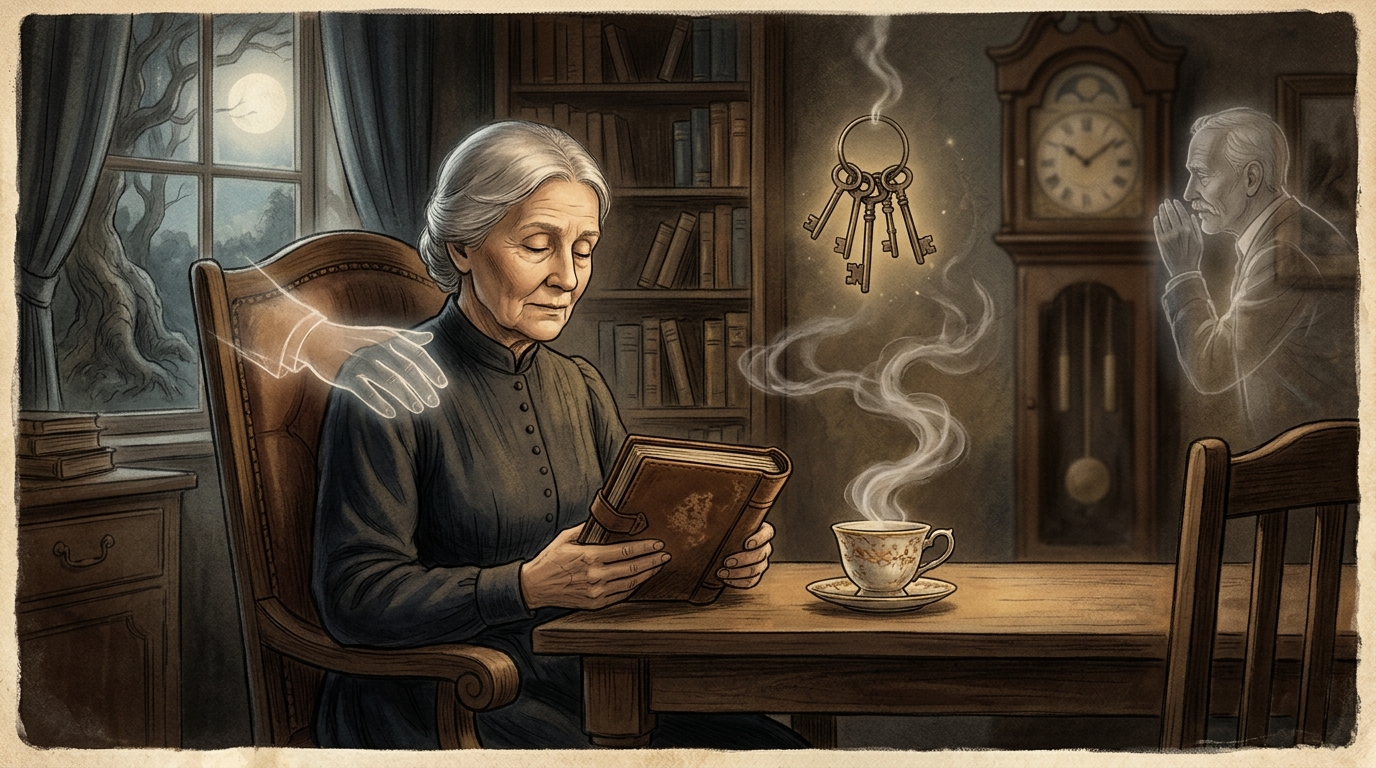
- Presence. The most common: a strong sense that the person is in the room.
- Voice. Hearing one’s name or a short phrase, sometimes advice.
- Vision. Seeing the person briefly, often at the edge of sleep or in a familiar place — their chair, the doorway.
- Touch and scent. A hand on the shoulder, a kiss, the smell of perfume or tobacco.
- Signs. A bird, a song on the radio, a light flickering at a meaningful moment.
Most people describe these moments as comforting, a sense that the bond is not broken. A minority find them disturbing. Many never mention them, fearing ridicule — which is why the experience seemed rare for so long.
How traditions explain it
In most cultures through history such experiences were expected: the dead visit, especially in the first forty days or on certain feasts like All Souls’ Day. Catholic tradition speaks of souls in purgatory asking for prayers; folk tradition across Europe kept customs to welcome or settle the returning dead. Spiritualism in the 19th century turned contact with the dead into a practice. For believers, the presence is exactly what it seems.
How science explains it — and where it stops
In 1971 the Welsh GP W. Dewi Rees interviewed 293 widowed people for the BMJ: 47% had sensed or perceived their dead spouse, often for years, and most found it helpful. Psychologists explain such experiences through the brain’s predictive models: after decades of hearing a voice and seeing a face in certain places, the brain keeps “expecting” them, and sometimes fills the gap. The modern theory of “continuing bonds” holds that keeping an inner relationship with the dead is a healthy part of grieving, not a failure to let go.
Where science stops: it explains how the mind can produce a presence. It cannot explain the accounts in which a person learned something they could not have known — and it cannot decide whether the presence is only memory. That remains open.
Known, disputed, open
- Known: sensing the dead is very common in grief and is usually comforting.
- Disputed: whether such experiences help or hinder grieving in the long term — research shows both patterns.
- Open: what is really present in those moments.
When to seek support. These experiences are normal. Talk to a doctor or grief counsellor if they are frightening, if voices tell you to do things, if you cannot function in daily life months after the loss, or if you feel you want to join the person who died. Be cautious with anyone who charges money to “contact” your loved one.
Frequently asked questions
Is it normal to feel the presence of someone who died?
Yes. Studies suggest that 30–60% of bereaved people have such experiences.
Why did I hear my dead mother’s voice?
Hearing a loved one’s voice is one of the most common grief experiences. Psychology links it to the brain’s deep familiarity with that voice; many traditions see it as a real visit.
Should I tell someone?
If you want to. Many people feel relief on learning how common the experience is. A grief counsellor will not think you are ill.
Where next
Sources
- Rees W. D. (1971). The hallucinations of widowhood. BMJ 4: 37–41.
- Castelnovo A. et al. (2015). Post-bereavement hallucinatory experiences: a critical overview of population and clinical studies. Journal of Affective Disorders 186: 266–274.
- Klass D., Silverman P. R., Nickman S. (eds.) (1996). Continuing Bonds: New Understandings of Grief. Washington: Taylor & Francis.