Survival & Self-Reliance · Warmth · Practical knowledge
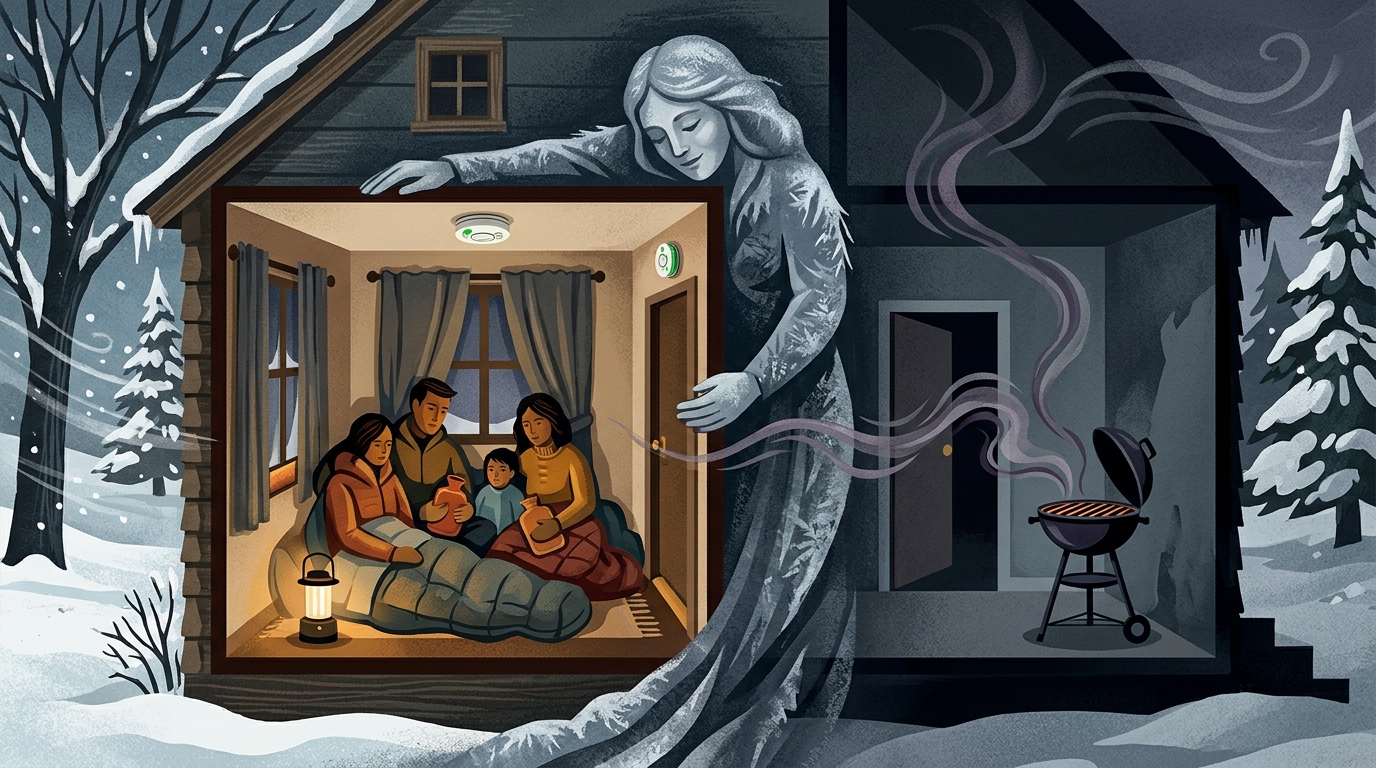
The main danger of a winter blackout is not only the cold. It is the attempt to get warm with the wrong device. Carbon monoxide has no colour, no smell and no taste — and it kills quietly, often while people sleep.
Part of our Disaster Survival Guide: The First 72 Hours.
The first 30 minutes of a winter power cut
- Find out how widespread the outage is and how long repairs are expected to take (battery radio, phone, neighbours).
- Choose one room — ideally with few outside walls and small windows, on the sunny side, not the biggest room in the house.
- Close doors to the rest of the house. Block draughts under doors with towels; close curtains and blinds, especially at night.
- Bring everyone, including pets, into that room. Several people in a small space warm it with their own bodies.
- Put on dry layers of clothing; cover the head, neck, hands and feet. Several thin layers are warmer than one thick one.
- Keep an eye on babies, elderly and sick people: they lose heat faster and notice it later.
Reducing heat loss without dangerous improvisation
- Hang blankets over windows and doorways; put rugs or blankets on cold floors.
- Make a “nest”: a small tent of blankets over a bed or table where children and the elderly can sleep.
- Eat regularly and drink warm (not alcoholic) drinks from a thermos. Food is fuel for body heat; alcohol makes you feel warm while you actually lose heat faster.
- Keep moving a little — but avoid sweating: wet clothing cools you fast.
- Do not seal the room completely. Insulate against draughts, but do not cover vents that a working appliance needs.
- To stop pipes freezing, let a cold tap drip slightly and open cupboard doors under sinks.
Never do this
- Never heat your home with a gas cooker or oven.
- Never run a generator inside the house, garage, basement, shed, on a balcony or porch — even with doors and windows open. The CDC says keep it at least 20 feet (6 metres) from doors, windows and vents.
- Never burn charcoal or use a barbecue, camping stove or gas lantern indoors or in a tent.
- Never warm up a car in a closed garage.
- Do not leave candles unattended or near curtains; battery torches and lanterns are far safer.
Heaters: only what the manufacturer allows
Use only a heater that its manufacturer explicitly rates for indoor use in that kind of room, with that fuel and that ventilation. A flame or a “catalytic” label does not automatically make a device safe. Fireplaces and wood stoves are only safe if the chimney is clean and working. Keep anything flammable at least 3 feet (1 metre) from any heater.
A battery-powered or battery-backup carbon monoxide alarm on every floor and near sleeping areas is the single most important purchase for winter. It costs less than a takeaway meal.
Signs of carbon monoxide poisoning
The CDC lists the most common symptoms as headache, dizziness, weakness, upset stomach, vomiting, chest pain and confusion — often described as “flu-like”. Warning signs:
- several people (or pets) in the same room feel ill at the same time;
- symptoms improve when you go outside and return indoors;
- a heater, generator or stove has been running nearby.
If you suspect carbon monoxide: get everyone out into fresh air immediately, do not go back in, and call emergency services. People who are asleep or drunk can die before they notice any symptoms.
Signs of hypothermia
- Adults: shivering, exhaustion, confusion, fumbling hands, memory loss, slurred speech, drowsiness.
- Babies: bright red, cold skin and very low energy.
A body temperature below 95°F (35°C) is a medical emergency. While waiting for help: move the person to a warmer place, remove wet clothing, warm the centre of the body first (chest, neck, head, groin) with dry blankets or skin-to-skin contact, give warm sweet drinks only if they are fully conscious. Shivering that stops while the person is still cold is a bad sign, not a good one.
When it is time to leave
Move to an official warming centre, relatives or another heated place before the situation becomes critical if:
- the indoor temperature keeps falling and the outage is expected to last days;
- there are infants, elderly, chronically ill people or anyone on powered medical equipment;
- you cannot keep warm without risky devices;
- anyone shows signs of hypothermia or carbon monoxide poisoning (then call for help immediately).
Checklist before winter
- Carbon monoxide and smoke alarms with fresh batteries.
- Warm sleeping bags or extra blankets for everyone; hats and gloves.
- Torches, lanterns, batteries, a power bank, a battery radio.
- Thermos flasks, food that needs no cooking.
- Chimney inspected; a generator (if you have one) with a safe outdoor place to run it.
- Know the location of the nearest warming centre and how to get there.
Frequently asked questions
Can I heat my house with a gas oven during a power cut?
No. Cookers and ovens are not designed to heat rooms and can release dangerous carbon monoxide. Health authorities warn never to use them for heating.
Can I run a generator by an open garage door?
No. Open doors and windows do not prevent carbon monoxide build-up. Run generators outdoors only, at least 20 feet (6 metres) from doors, windows and vents.
Does keeping one warm room really help?
Yes. A small, closed room with several people, insulated windows and floor coverings stays noticeably warmer than a whole house, and makes it easier to watch over children and the elderly.
Where next
- Disaster Survival Guide: The First 72 Hours — the main guide
- How to make water safe to drink in an emergency
- Emergency shelter in the woods, a field and the city
Sources
- “Carbon Monoxide Poisoning: Prevention” and “Symptoms”, CDC.
- “Preventing Hypothermia”, CDC Winter Weather.
- “Power Outages” and “Winter Weather”, Ready.gov.